(c) 2026 Cleveland Repertory Orchestra and Ronald Werman
August tends to be the end of my conducting cycle for the season. It's the time when my calendar is sparse, my email is slow, and it's the opportunity for me to finally catch my breath and reflect on everything that happened during the previous season before turning my attention to what comes next. During these last few days of calm, I kept looking back to April 11.
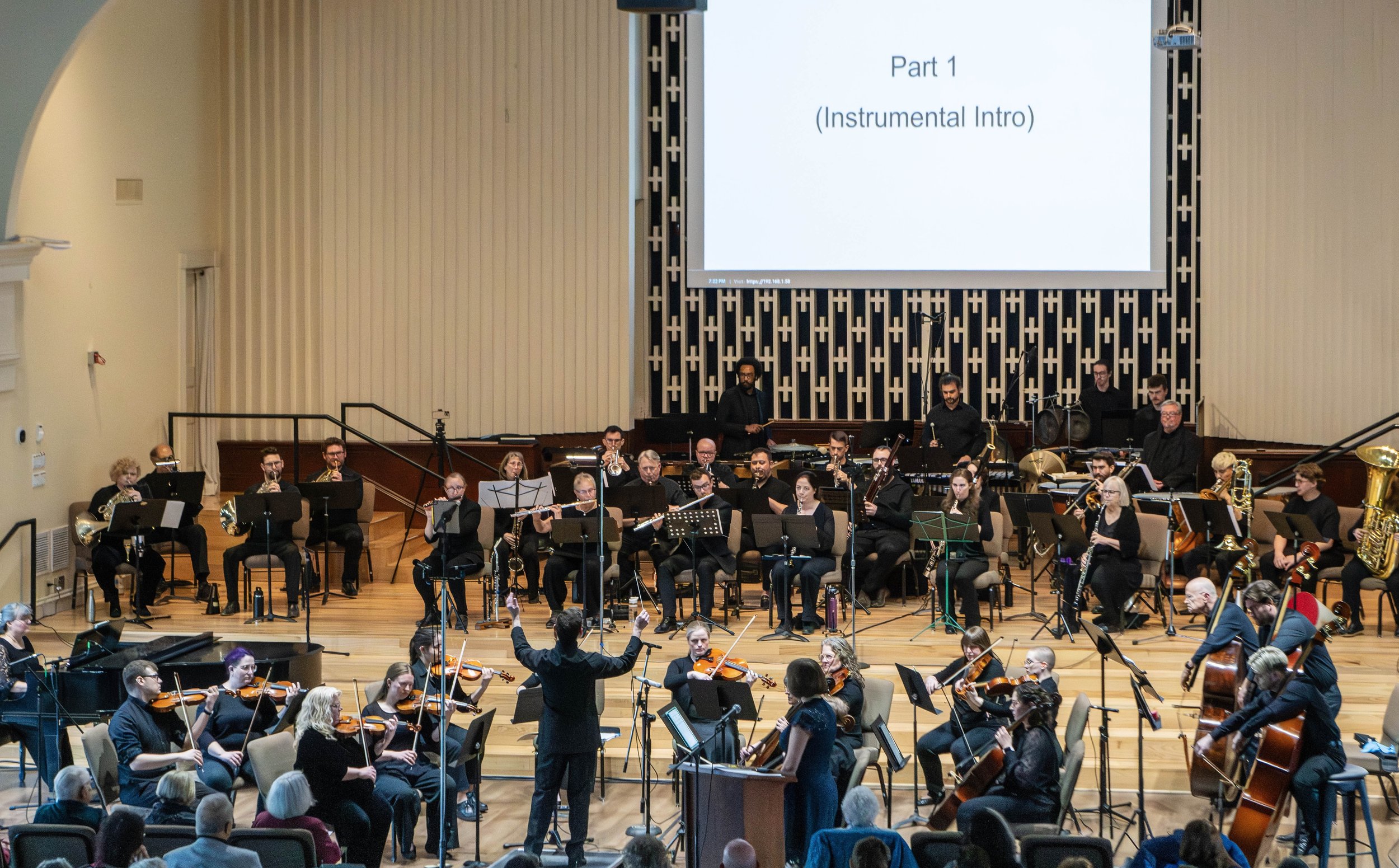
That was the night the Cleveland Repertory Orchestra performed a concert dedicated to Michael Tilson Thomas and his contribution to American classical music. It included his "From the Diary of Anne Frank" and Copland's "Appalachian Spring." Before a note was played, Erika Gold spoke. Gold is a Hungarian Holocaust survivor, and listening to her draw the parallels between her own life and Anne Frank's was chilling… Being pulled off one of the cattle cars. Going into hiding. Having to stay completely still. …How close they could have come to a different outcome. All of this before we were about to perform a piece that literally brought Anne's words back to life.
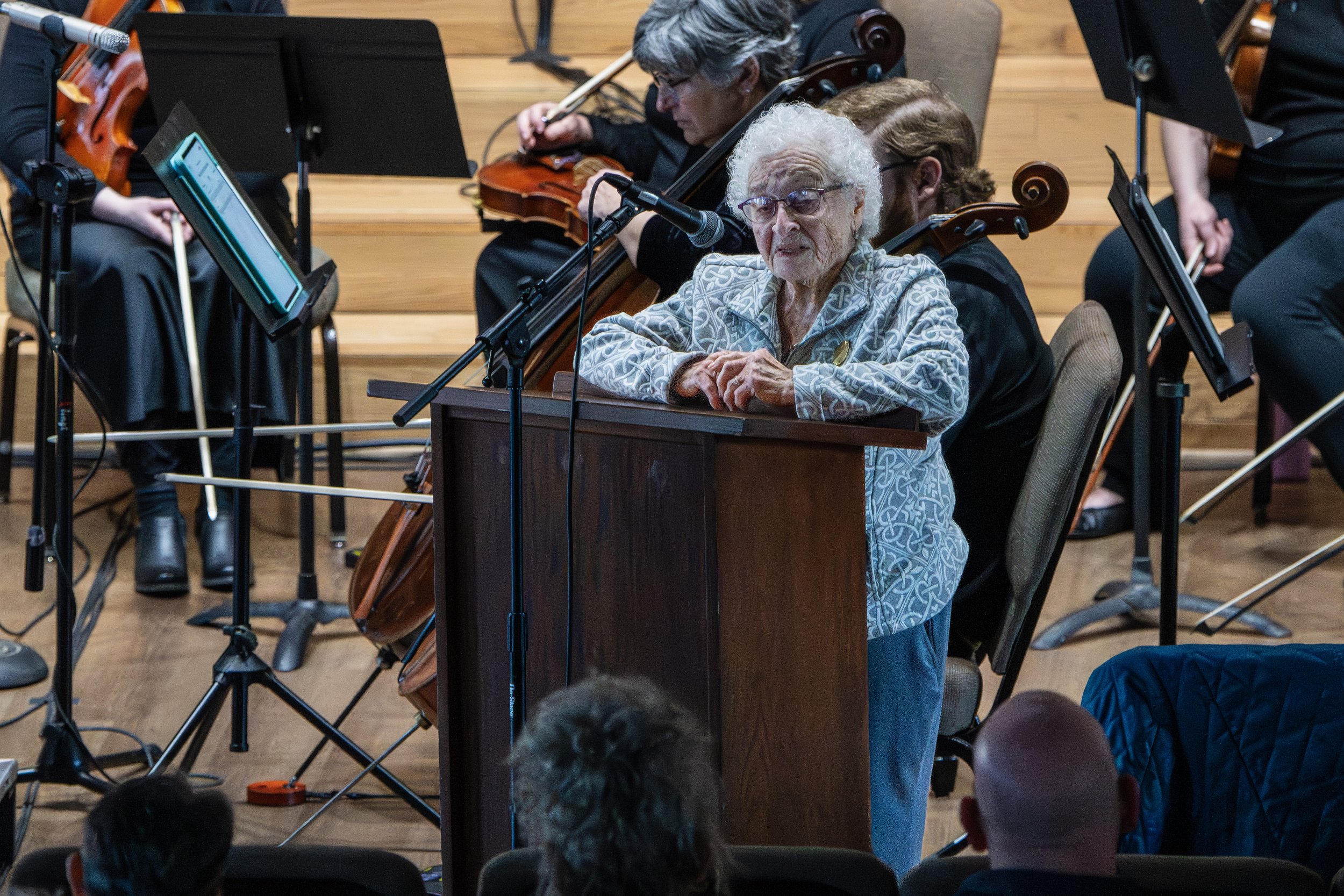
Erika Gold (c) 2026 Cleveland Repertory Orchestra and Ronald Werman
The piece was difficult to prepare. The jazz rhythms and complex harmonies are demanding on their own, and coordinating the music with Kira's narration, managing the projection of her words in the space, all on a condensed rehearsal schedule with a group that is still relatively new to each other, made it one of the most complex things we've undertaken in the five years since I founded the CRO. The players were capable, but there was a lot to hold together. Kira McGirr narrated Anne's words, and in performance, with Erika's story fresh in our minds, something shifted. Kira's reading was more impassioned than it had been in any rehearsal.
There were moments of levity in the piece too, which is true to Anne. Her voice was curious, and fun… and alive, something MTT captured with a child-like excitement.
Eleven days after the concert, on April 22, Michael Tilson Thomas died.
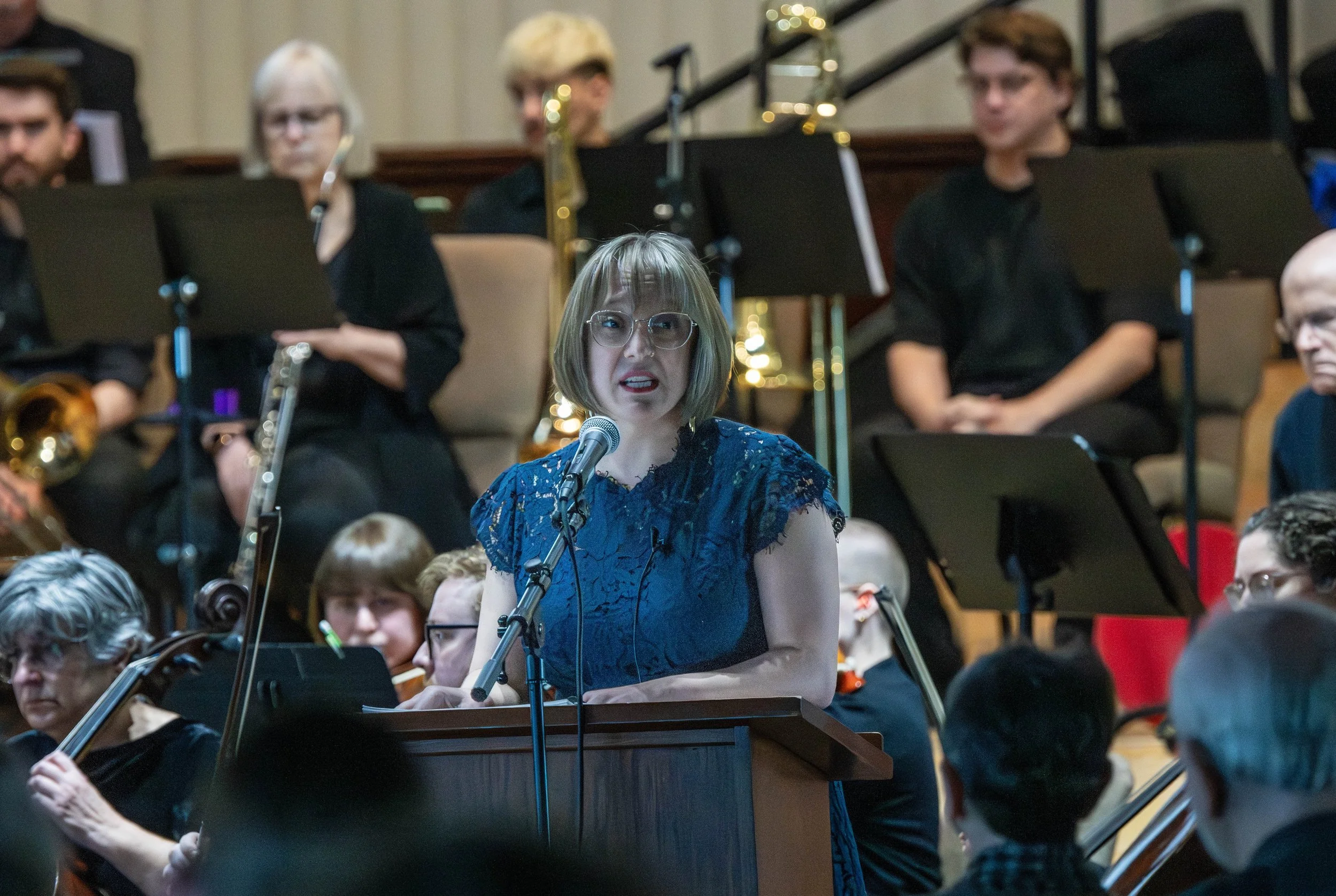
Kira McGirr (c) 2026 Cleveland Repertory Orchestra and Ronald Werman
MTT was one of the first conductors I became aware of as a young musician. His visibility was just as important to me as the artistry he represented and the integrity with which he approached his work. He was one of the first contemporary examples of someone I could look at and identify with, and he empowered me to think that maybe there was a place for me in this profession.
He was openly gay at a time when that wasn't the norm in classical music. He built one of the great American orchestras, led it with total authority, and never felt compelled to hide anything about himself in the process.
I was a high school student in the early 2000s when I discovered MTT, and that he had a partner who was also well known in San Francisco and with the San Francisco Symphony. At a time when I was figuring myself out, his visibility mattered in ways I couldn't have possibly articulated then.
What also drew me to him was how he talked about music. MTT had a gift for making the most complex orchestral repertoire feel immediate and human. He understood that the distance between a concert hall and everyday life was often problematic, and he spent his career solving it through the San Francisco Symphony's media work, Keeping Score, and the way he spoke to audiences from the podium. He was curious in public, and he invited people into that curiosity. That's something I think about with every concert I do.
On February 24, 2025, he announced he would no longer be conducting, and his imminent concerts with the New World Symphony and the San Francisco Symphony would be his last. He had retired as planned from the San Francisco Symphony in 2020 after 25 years as Music Director, and his brain cancer diagnosis followed shortly thereafter in 2021. The permanence of the announcement was hard to miss. MTT faced his diagnosis with optimism, but I think we all seemed to understand its inevitability.
Two months later, on April 26, I flew to San Francisco for his final concert at Davies Symphony Hall with the orchestra he helped shape for 25 years.
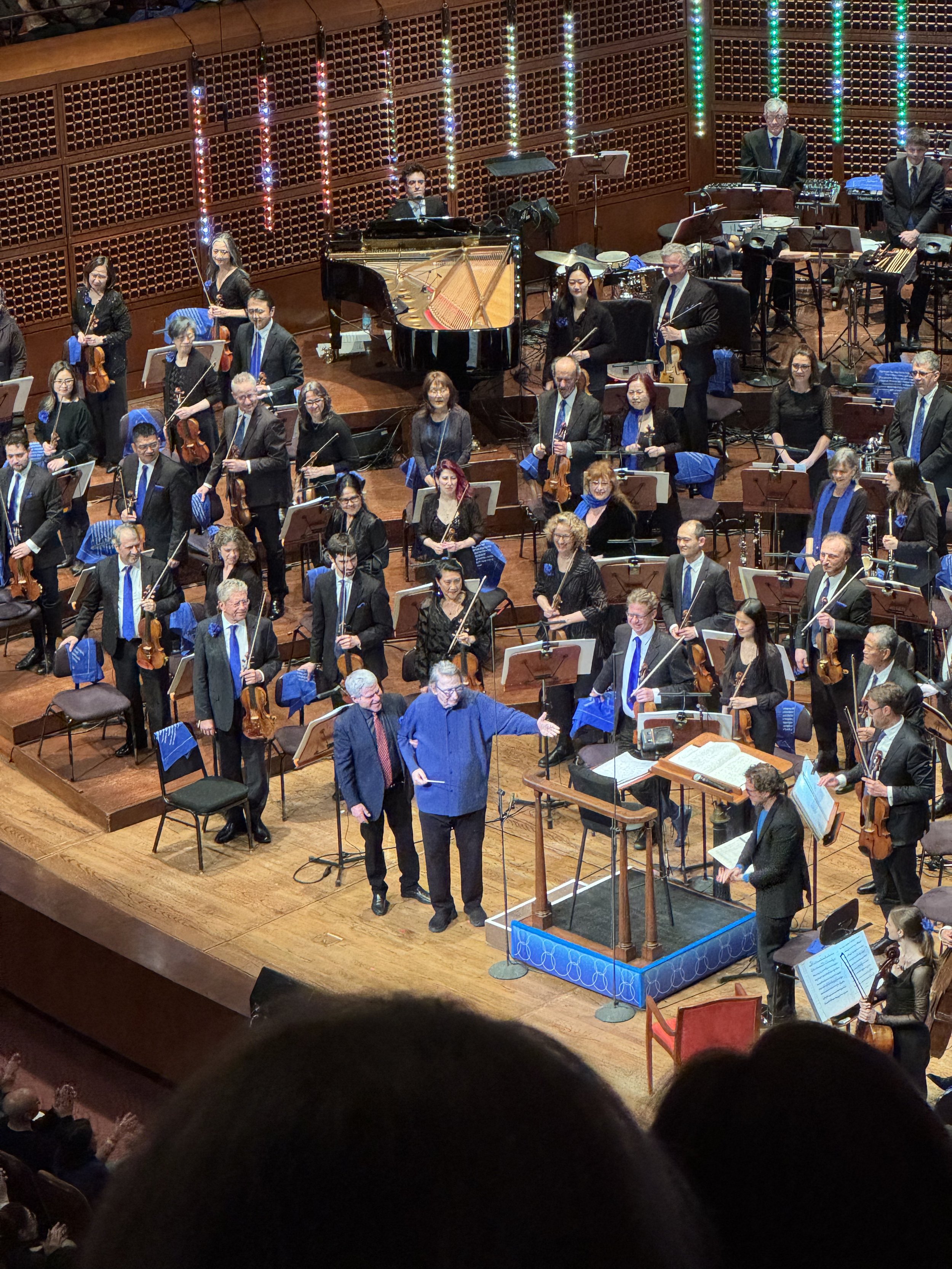
MTT with the San Francisco Symphony, 2025
Since the announcement that he would retire from conducting, I knew I wanted to program his music. "From the Diary of Anne Frank" had been on my list for years. I paired it with Copland's "Appalachian Spring" because MTT had a personal relationship with Copland and performed his music throughout his career. Putting those two pieces together felt like a proper celebration of his voice as a composer alongside the tradition he had been part of for decades.
We thought of April 11 as a celebration of his life as a musician. We all knew MTT was dying. That only meant something to those of us who knew him, even if only peripherally, but in celebrating his legacy, it gave others a glimpse of who he was and what he left behind. None of us knew he would be dead only eleven days later.
I've sat with that a lot this summer. We were in that room, with Erika's testimony still in the air and Kira's voice carrying Anne's words, and MTT was still alive.
The concert was designed as a tribute to both of them. Anne's words and spirit still fill the world, in a time when the world is a complicated place for many of us and senseless war prevails. MTT spent his life making connections between ordinary people and classical music, and causing us to confront our shared humanity through his artistic expression. Both of them continue to live on in all of us.
I chose that music because of what it meant to confront all of it at once: MTT's piece and the world it inhabits, Anne's words that we were about to bring back to life, the knowledge that MTT was dying, and the fact that we were presenting it to a world where so many atrocities still exist. That's what I think orchestral programming is for.